
Make Social Media Settlement Dollars Count for Youth
We have an opportunity to invest in what helps young people thrive.
Meta settlement – and future social media litigation payouts – could generate billions in resources intended to address harms affecting young people.
This creates an important opportunity to invest in the people, programs, and supports that help young people thrive.
But a settlement does not determine its own impact. States will decide where resources go, who helps shape those decisions, and how the public will know whether the investments made a difference.
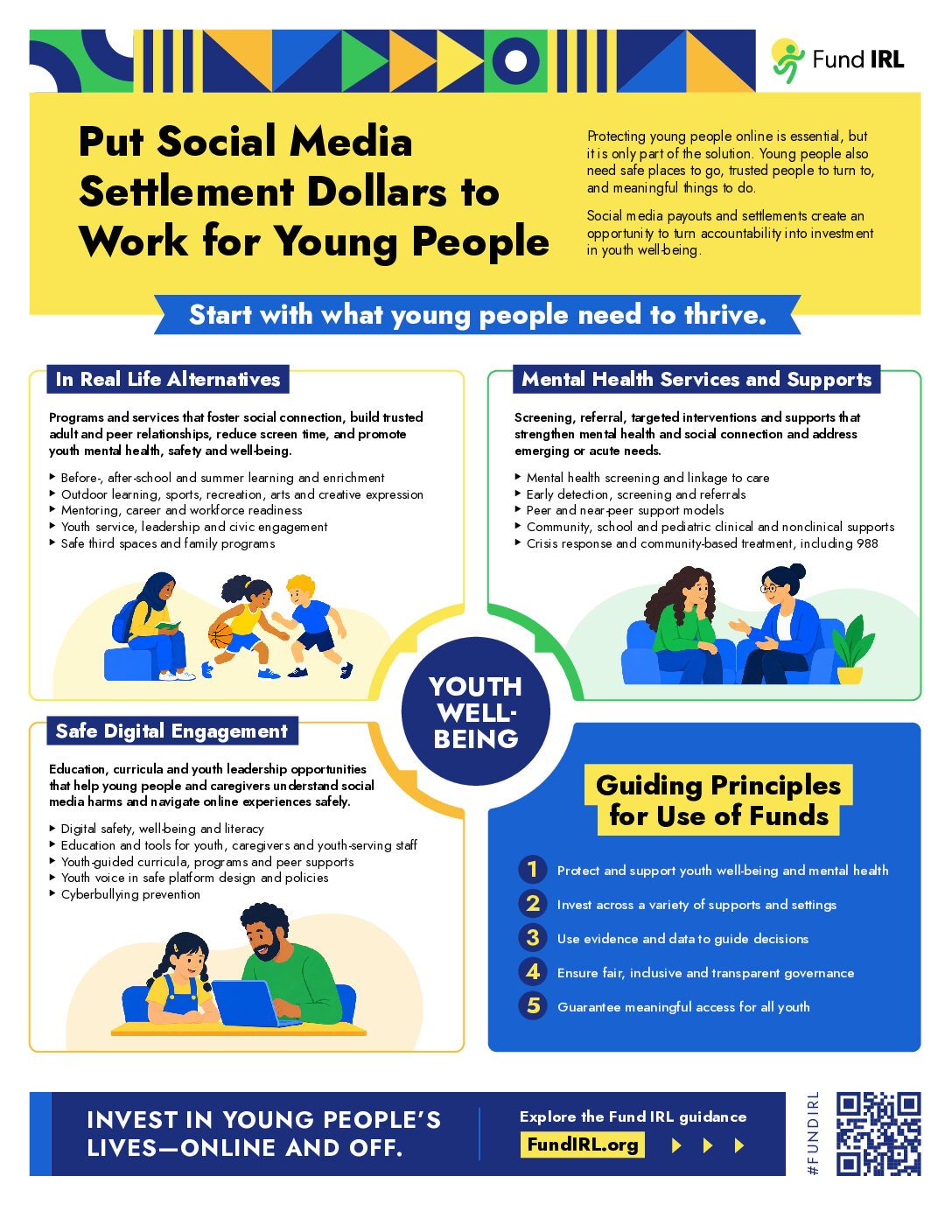
5 Principles for Use of Funds from Social Media Lawsuits
Fund IRL’s Guidance on the Use of Funds from Social Media Lawsuits offers five principles to help states ensure settlement resources meaningfully benefit young people. The Meta settlement creates an opening. Fund IRL’s Guidance can help states turn it into meaningful opportunity where it matters most.
Three ways states can invest in youth well-being
In Real Life
Give young people more to connect to.Invest in the people, programs and places
Afterschool and summer programs, sports, arts, mentoring, outdoor experiences, libraries, youth leadership and other community opportunities. Invest where young people build relationships, discover what they love and feel like they belong.Safe Digital Engagement
Help young people feel more confident and supported online.Invest in Digital Safety Measures
Give young people, families and trusted adults the skills and tools to navigate digital life safely and well.
Digital citizenship and literacy, cyberbullying prevention, family education, youth leadership and digital well-being.
Mental Health Supports
Make support easier to reach, before a challenge becomes a crisis.Invest across the continuum of youth mental health and well-being
Prevention, early intervention, community-based support, treatment and crisis response.
Fund IRL brings together national, state, and local organizations working to ensure resources from social media litigation are invested back into young people and the programs, relationships, and opportunities that help them thrive.
